Blog
How to find the best osteopath in Montréal
The best osteopath in Montréal isn’t the same for everyone. To find an osteopath who’s right for you, a few pointers can help you choose: their training, whether they belong to a professional association, and what the people they see say about them.
By Nicolas Acquié, osteopath D.O.
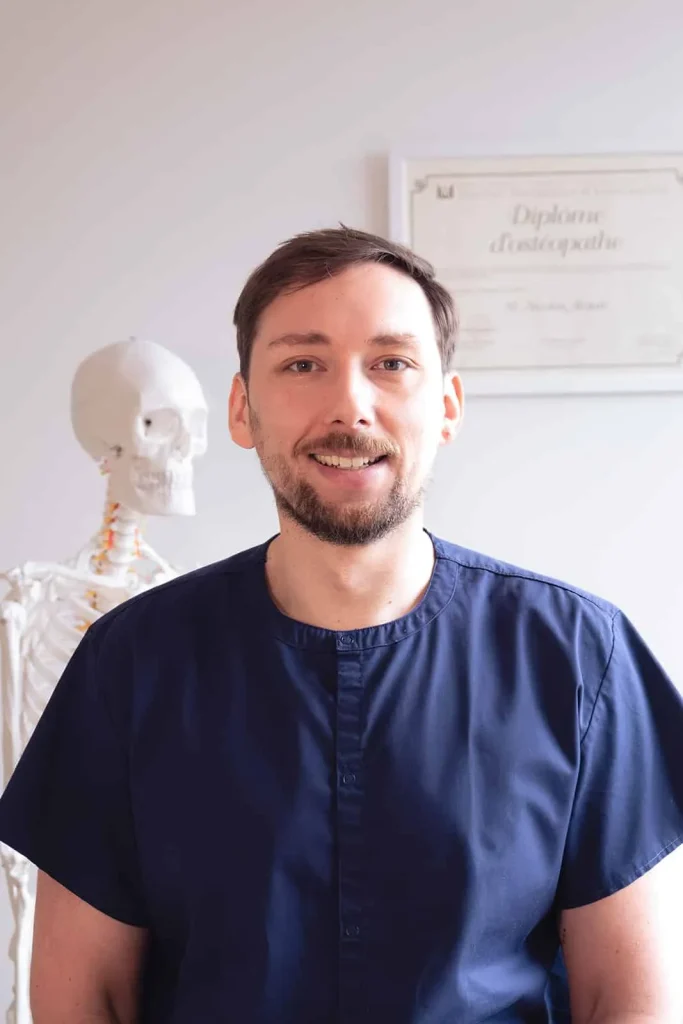
Over the years, osteopathy services have multiplied. How can you be sure you’re seeing the osteopath who’s right for you? What criteria let you be sure you’re dealing with the right person? Here are a few leads for your search.
Looking for the best osteopath in Montréal
The best osteopath in Montréal will above all be someone you feel like talking to. The first thing that will matter in a relationship as particular as a therapeutic one is the trust you can place in that osteopath.
Best osteopath in Montréal or in Québec: you won’t find any ranking or names to recommend here. Ostéopathie Québec, a professional association, suggests talking with the osteopath first: their training, their experience, their approach, whether they belong to an association. Then it’s up to you to judge whether the trust is there.
How can you tell if an osteopath is good?
To build that trust, several things can help you.
- The osteopath’s academic background, starting with the number of years of study. In Québec, private institutions provide the training. Members of Ostéopathie Québec have 5 to 6 years of study behind them, theoretical and clinical, or an equivalency (application assessed, clinical exam passed).
- Membership in a professional association: I explain just below how to check it.
- Google reviews, used more and more in our connected society.
- “Classic” word of mouth: advice from your family, from the people close to you.
How can you check that an osteopath belongs to an association?
To check membership in Ostéopathie Québec, the simplest way is to look at its member directory (in French). It only shows members who have agreed to display their profile publicly. So a member may not be listed: if in doubt, ask the osteopath before booking.
Good to know
In Québec, osteopathy is not yet regulated under the Professional Code. In 2026, the government announced work to regulate osteopaths. I come back to this in my answer about how the profession is regulated, on the home page.
Choose, then confirm at the first appointment
Once you think you’ve found the right person, it’s time for the appointment and the session.
I describe how a first osteopathy appointment unfolds on another page. Here are just a few pointers.
Your story and your expectations
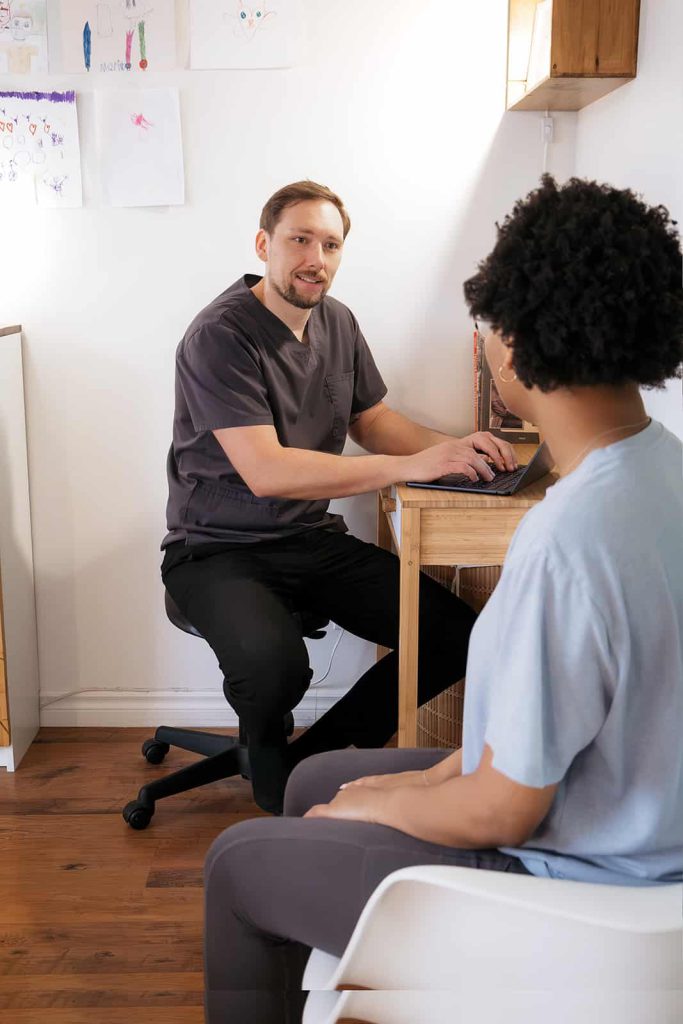
It’s a time for conversation, where the osteopath and you talk about your reason for coming, your medical history (surgeries, injuries, medications, recurring discomfort…), your lifestyle, and your expectations of osteopathy.
A practice that’s unique to each osteopath
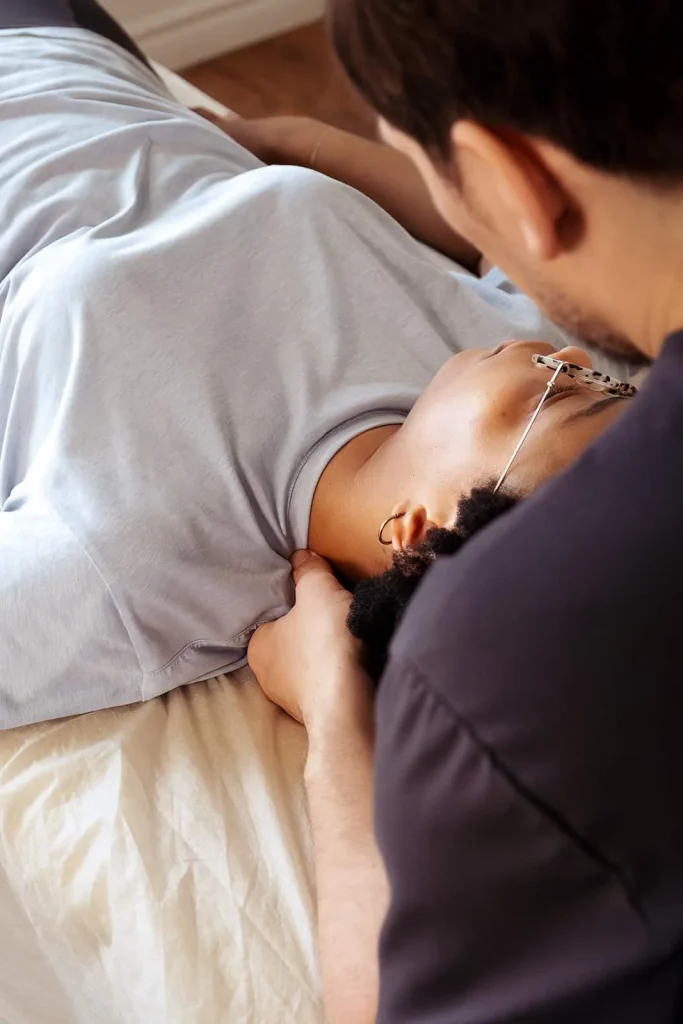
It’s a practical part where, depending on the osteopath’s sensibility, they offer you a range of techniques, with or without explanations of them.
Tips for your daily life
Finally, this “best osteopath” may also pass on a few tips at the end of the session, so that at home, in your daily life, you can enhance the benefits of the osteopathic treatment: rethinking your lifestyle habits, seeing other professionals (doctor, physiotherapist, psychologist).
Without a referral, and without a medical diagnosis
You can see an osteopath directly, without a doctor’s referral.
Even though they can’t make a diagnosis, an osteopath’s very first job is to find out whether your reason for coming falls under osteopathy. Ostéopathie Québec’s code of ethics requires its members to point you toward another professional if your interests require it, and with your consent (code of ethics, in French).
How many sessions should you expect?
Often, one session is enough to help you, sometimes two, rarely three. That’s what we figure out together at the first appointment. If there’s no improvement after three sessions, I’ll generally point you toward another professional. Why so few sessions? It comes down to the osteopath’s role.
The best osteopath in Montréal works to “give you back options for mobility”. An osteopath’s goal isn’t to treat you or to cure you. Their focus is on supporting your health. In other words, they’re interested in giving your body back its ability to function.
Like a (sophisticated) machine, your body can sometimes have grains of sand in its gears. In this analogy, the osteopath’s role is to remove these obstacles that disrupt how your body works. It isn’t their mission to make those gears turn for you.
So, generally, an osteopath won’t have you come in several times a week for several months to do this work.
The best osteopath in Montréal will be the one who’s right for you. In other words, he or she will be the osteopath who, in your view, meets the different criteria mentioned above.
Nicolas Acquié, osteopath D.O.
I’m an osteopath D.O. (graduate in osteopathy). I earned my diploma at the Institut Toulousain d’Ostéopathie (France) in 2013. I also teach at the IEOQ, the Institut d’Enseignement de l’Ostéopathie du Québec. You’ll find me at my practice in Rosemont-La Petite-Patrie.
My backgroundAlso worth reading
If you’d like to see me
When the time is right for you, book online on GOrendezvous, or by text at 514-663-3826.
Choosing your osteopath: other questions
Can an osteopath guarantee you a result?
A member of Ostéopathie Québec can’t: their code of ethics forbids them from guaranteeing, directly or indirectly, recovery from an illness or the result of a treatment. When you’re choosing your osteopath, a promise of results is something to keep in mind.
What recourse do you have if there’s a problem with an osteopath?
If your osteopath is a member of Ostéopathie Québec, you can contact the association’s Bureau de syndic (office of the syndic) to report a concern, express dissatisfaction or ask questions about your osteopath’s practice: that office receives requests for investigation. If needed, a disciplinary committee hears complaints filed by the Bureau de syndic and decides, where appropriate, on a sanction. The “Protection du public” (public protection) page on Ostéopathie Québec’s website explains how to go about it.
Will my insurance reimburse any osteopath?
Not necessarily. It depends on your policy, which may, for example, require the osteopath to be a member in good standing of their professional association. Before your session, check these conditions with your insurer.
What does “D.O.” after an osteopath’s name mean?
D.O. stands for “diplômé en ostéopathie” (graduate in osteopathy). Those are the two letters you see after my name. I earned my diploma in 2013, at the Institut Toulousain d’Ostéopathie, in France. Becoming a member of Ostéopathie Québec is a separate process: the graduate applies for membership, then takes a competency assessment exam, and is then accepted or not by the association.