Sports osteopath
A sports osteopath is there to understand the different demands on the body, to help each athlete perform in their sport. In sports osteopathy, I see competitive athletes and amateur athletes alike at my practice in La Petite-Patrie, in Montréal, for discomfort that keeps coming back, an event to prepare for, or a return to sport.
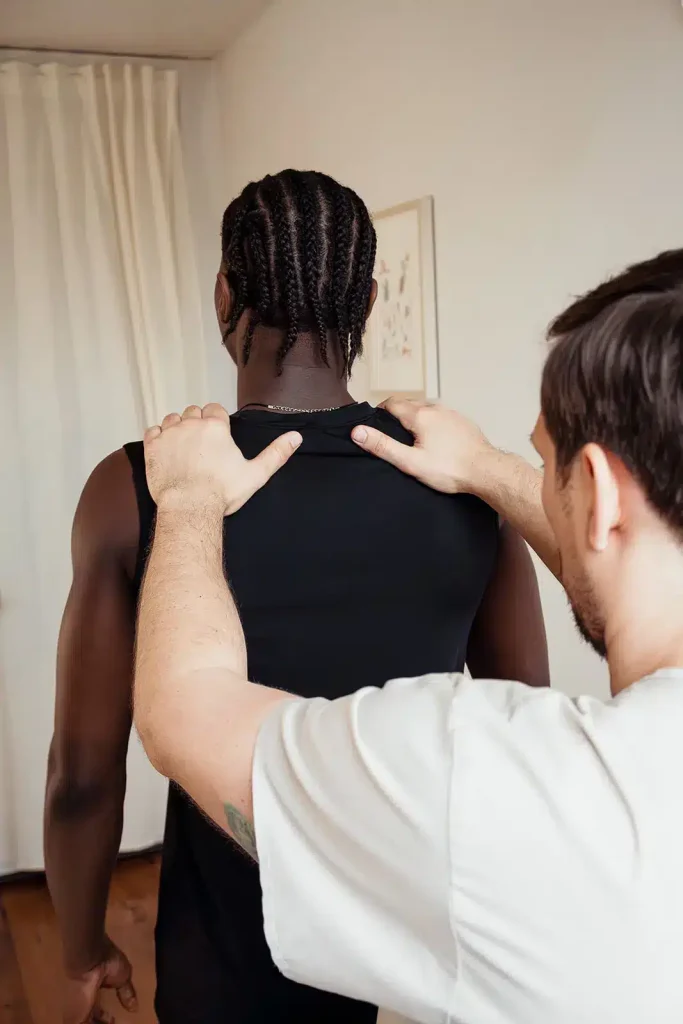
It was sport that led me to osteopathy. As a kid, I grew up between judo mats and basketball courts. An injury changed everything: it led me to walk through the door of the osteopath for my town’s basketball team. That encounter opened up a world I didn’t know. Today, I’m lucky enough to work with, among others, the rugby players of the XV de Montréal, the young international basketball players of Hoop Canada Empire, and ultra-trail runners.
Why does an athlete’s body react differently?
Sport, whether recreational or high-level, places repeated demands on the body. Each discipline has its own load patterns.
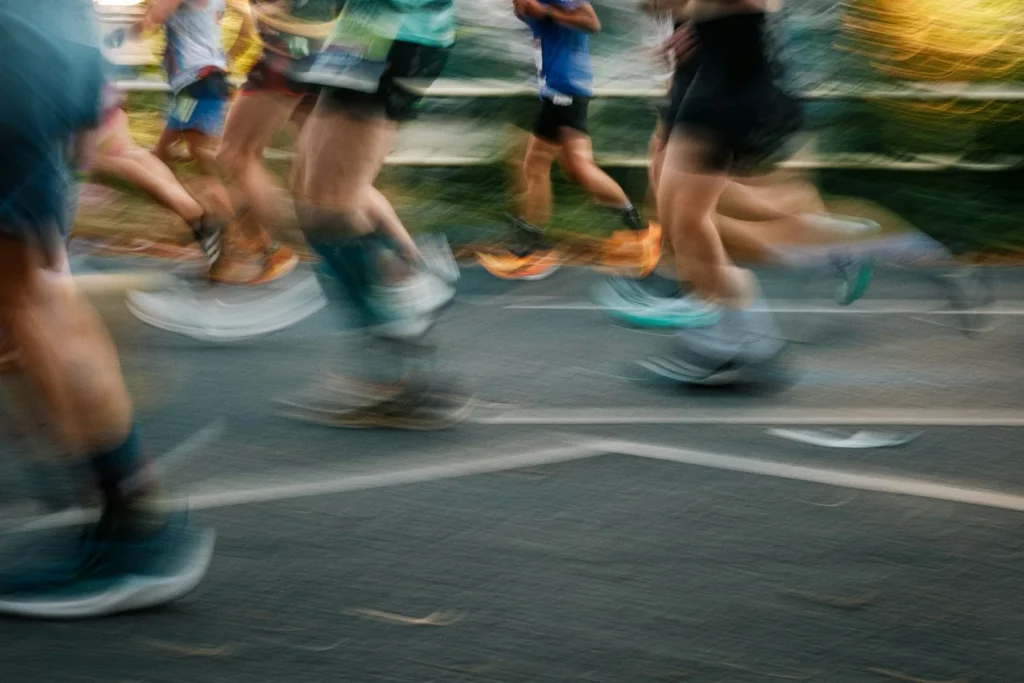
Distance running
A distance runner repeats thousands of strides in the same plane of movement.
Rugby
A rugby player absorbs asymmetrical impacts across the whole body.
Basketball
A basketball player works her ankles, her knees… in directions few other sports demand.
Daily life
It’s not that these demands are dangerous in themselves. It’s their repetition, combined with the tension of daily life (sleep, stress, posture at work), that ends up creating compensations.
The body adapts, until the moment it can’t anymore! And that’s where I come in, even before!
Who is sports osteopathy for?
Competitive athletes, first of all: those whose body is their work tool and for whom a week of recovery costs a lot. But also amateur athletes who run on weekends, cycle, play hockey or soccer, or do CrossFit, and who want to take care of their body seriously.
When should you see a sports osteopath?
Pain that comes back after every outing
During the season: discomfort that keeps coming back (knee, Achilles tendon, hip, back, shoulders).
Tension that has lingered for weeks without really going away
Often a sign that the body is adapting elsewhere.
A joint that doesn’t recover between workouts
Difficult recovery, back-to-back competitions and travel.
A vague discomfort you can’t quite pinpoint
An overall assessment, beyond the one area where you feel it.
For prevention
Before a competition, a marathon, a return to sport, to make sure nothing is holding back your preparation.
For recovery
After an intense effort or an injury (with medical clearance), to support a safe return to activity.
An approach adapted to your sport and your life
My approach adapts to each person, and to your training and competition schedule.
An athlete is a person first. They go through breakups, short nights, periods of mental overload. What changes is the context their body is operating in. That context is what I take into account, not just the mechanical complaint.
Important
Osteopathy doesn’t replace medical care: it complements it. After an impact, a fall or a recent injury, see a doctor first, or call Info-Santé 811. In an emergency, dial 911.
Field experience with athletes
My background
XV de Montréal
A Montréal rugby club. I’m an osteopath for its players.
Hoop Canada Empire
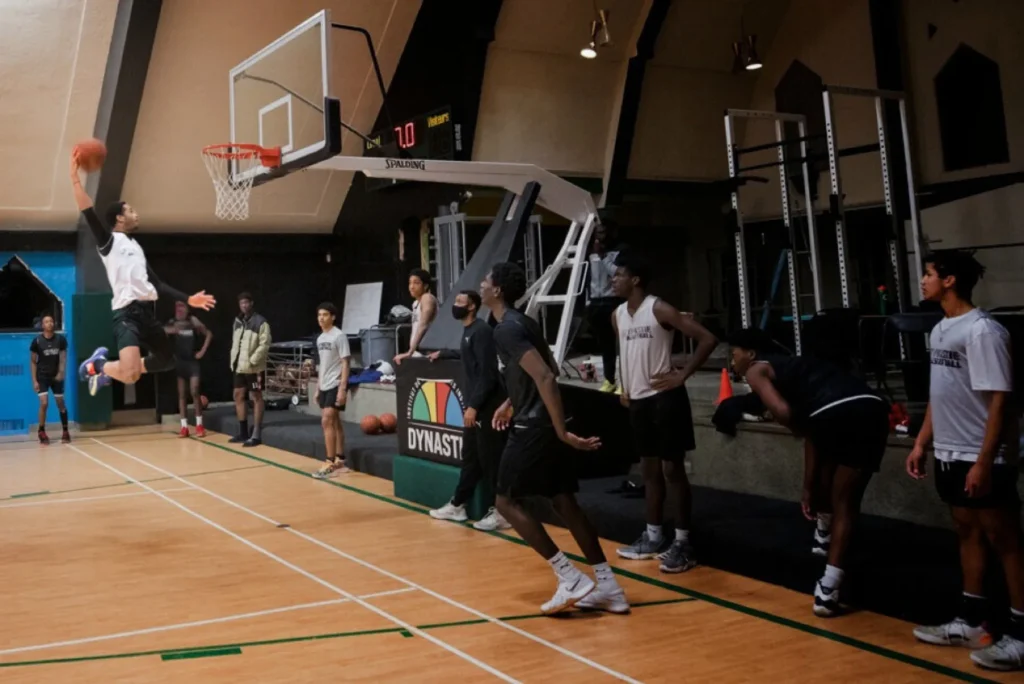
A basketball program in Montréal. I follow up with athletes from the program.
Over the seasons
I’ve worked with athletes and organizations in basketball, running/endurance (marathon, ultra-trail, triathlon/Ironman), rugby (semi-pro and pro) and combat sports (pôle espoir judo, boxing).
Trained alongside athletes
During my training at the Institut Toulousain d’Ostéopathie (France), I did internships at the Pôle Espoir de Judo and the Toulouse Basket Club (now the Toulouse Basketball Club). Later, in my practice, I was able to see triathletes, tennis players… In particular, I was lucky enough to follow the young international basketball players of the Institut Dynastie throughout their time on Canadian soil, and some of them later went on to the highest level in the United States.
What this support can bring to your sport
Recovery
Identifying what the body is compensating for, not just the spot where it hurts. Persistent tension is often a sign of an adaptation elsewhere.
Preparation
Checking before an event that the body moves freely and that nothing is holding back performance.
Autonomy
Understanding your own signals so you can act before it becomes a problem, and come in less often.
Return to sport
When you need to move a bit more, for a safe, well-guided return to sport, I point you toward Rémy Cano (his page, in French), the strength and conditioning coach I work with. He works on the South Shore. But he also does private follow-ups.
Every year, in early spring, I notice that more people come to see me for muscle or joint discomfort linked to getting back into physical activity too hard or too fast. The body needs time to find its “bearings” again, its mobility and its tolerance for effort.
What does an osteopathy session look like for an athlete?
A session lasts 1 hour. For what to wear and what to plan for, it’s the same as for a first osteopathy appointment.
A conversation about your sport
The session starts the same way as a “regular” appointment, with a conversation that goes a little deeper into your sport, your history, what you’re feeling and what you’re asking of your body right now.
The overall assessment
Next comes an overall assessment of mobility and tension. It’s also functional: I observe your key movements, your range of motion, your areas of stiffness.
Hands-on work
I use gentle hands-on techniques to support mobility and reduce tension.
Understanding what’s going on
As the appointment goes on, I explain the areas I’m working on and the techniques I’m using, so that you understand what’s happening during the session, and leave knowing what makes sense to put in place at home and in your sport.
The areas of the body sport calls on
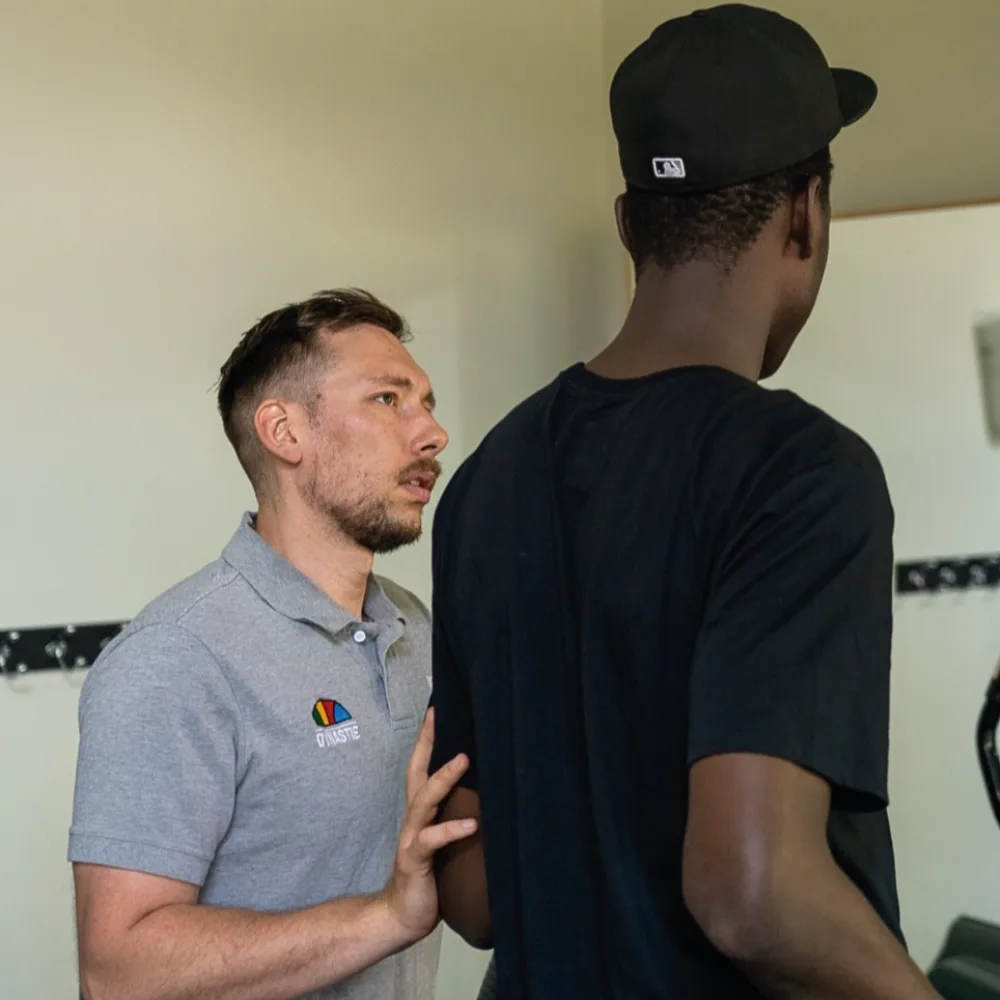
I observe the joint mobility of the area that’s bothering you, and that of the whole body. For athletes, visits to the osteopath are often due to discomfort in the muscles and tendons.
Knee
When landing from a jump, the knee absorbs the largest share of the impact, along with the hip and the ankle.
Ankle and Achilles tendon
Through the Achilles tendon, the calf muscles extend the ankle (pushing off with the foot). This tendon bears up to ten times body weight in running and jumping.
Hip
In hockey, soccer or basketball, explosive starts and quick changes of direction ask a lot of the hip.
Back
When throwing, if the upper back controls the movement less well, neighbouring regions, like the lower back or the shoulder, often take over. I talk about this in more detail in my article on back discomfort.
Shoulders
When throwing or serving, the speed of the arm is built up from the legs, the trunk and the shoulder blade.
Rib cage
Mobility, control and strength in the upper back contribute to athletic movement and help avoid excessive load on other regions.
Fees and reimbursement
The session
1 hour, $125 plus taxes
Receipt
You receive a receipt by email, which you can submit to your insurer for reimbursement.
Insurance
Many private insurance plans cover part or all of the cost: check your “paramedical services” or “alternative therapies” coverage with your insurer.
Payment
Interac e-Transfer is the preferred way to pay.
Booking
No credit card or deposit required to book.
RAMQ
Osteopathy sessions are not covered by RAMQ, which runs Québec’s public health insurance plan.
The practice
910 rue Bélanger Est, Suite 206, Montréal, Québec H2S 3P4, between Saint-André and Boyer streets
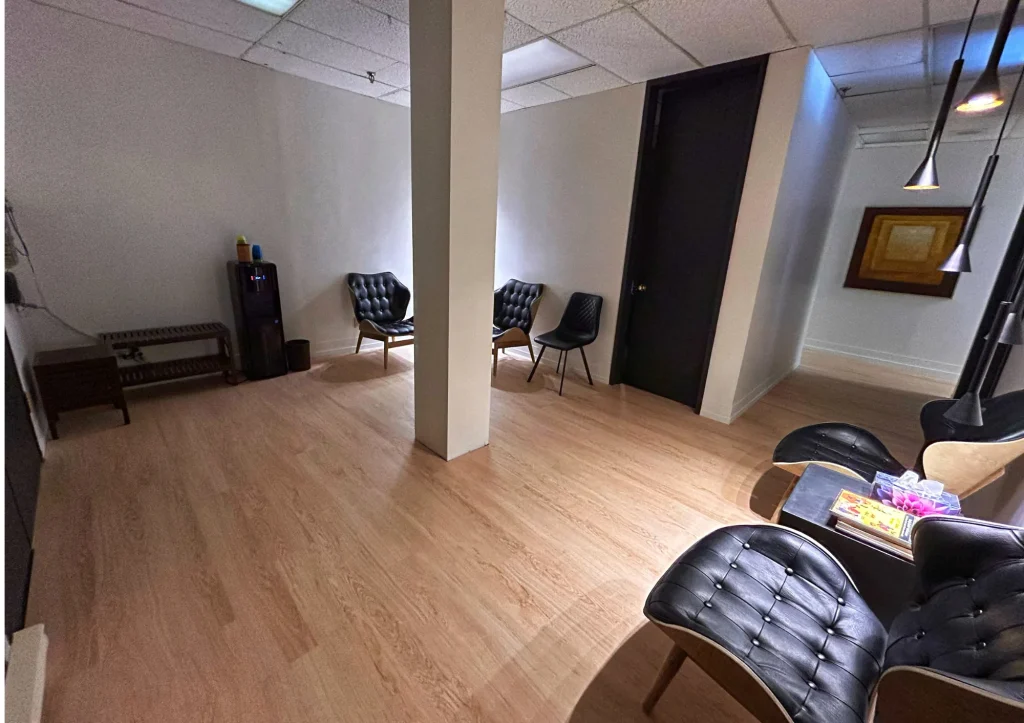
Centre professionnel Makisa
A ramp leads to the building entrance, and an elevator goes upstairs.
Jean-Talon station (orange and blue lines), the closest to the practice, 450 m away, about a 5-minute walk
By bus, the 95 Bélanger stops on either side of the practice, in both directions: Bélanger / Saint-Hubert and Bélanger / Christophe-Colomb stops.
Street parking nearby, and paid covered parking between Boyer and Saint-André streets (perfect when it snows).
 How to get to the practice
Book an appointment for your sport
When the time is right for you, book online on GOrendezvous, or by text at 514-663-3826.
Your questions about sports osteopathy
Can an osteopath help with a sports injury?
Osteopathy works on restricted mobility, muscle and joint tension, and the compensations the body develops after an injury. It doesn’t replace medical care for structural damage. After an injury, once you have medical clearance, I support you as you return to sport.
Should you see an osteopath before or after a race or a game?
Both make sense. Before a race or a game, a session is a chance to check that your body is ready. Afterwards, it supports recovery, especially after an intense effort. Many athletes do both.
How many sessions does an athlete need?
Often, one session is enough to help you, sometimes two, rarely three. If there’s no improvement after three sessions, I’ll generally point you toward another professional. For in-season follow-up or specific preparation, a regular rhythm, for example one session a month, can be worthwhile: that’s what we figure out together at the first appointment.
How do you get back into sport after a break or an injury?
When you get back into it, the most important thing is to listen to your body and progress gradually. For example, you can keep the same load for a whole week (the same distance, the same weight or the same duration), one that lets you enjoy the activity without feeling real pain. I’m not the only one saying so: in its injury prevention advice, the Institut national de santé publique du Québec (Québec’s public health institute) recommends not increasing training volume too quickly. After an injury, once you have medical clearance, I support you as you return to sport, alongside your medical care.
Is osteopathy effective for athletes?
With an athlete, my goal is to give the body back options for movement, alongside medical care, without promising you any result. I look at your mobility, your recovery and the preparation for your events, and I explain what’s going on in your body. When your situation calls for another professional, I point you toward them.
Can you exercise after a session?
You need to move! We’ve introduced new options for movement. So it’s important to keep helping the tissues recover and adapt (and that’s what movement provides). On the day itself, though, we recommend favouring light or moderate activity and avoiding maximal effort that’s uncomfortable or painful, for 24 to 48 hours. You leave with simple tips (breathing, micro-mobility, training habits) to maintain the effects. If a reaction raises questions, write to me: I’m available.