From the very first days
Osteopath for babies and infants
The first weeks of life are a time of intense adjustment for a newborn’s body. From birth, I see you in Rosemont-La Petite-Patrie for an osteopathy session to assess how baby’s little body is adjusting, and I step in gently if something needs attention. These sessions add to your baby’s pediatric care, without replacing it.
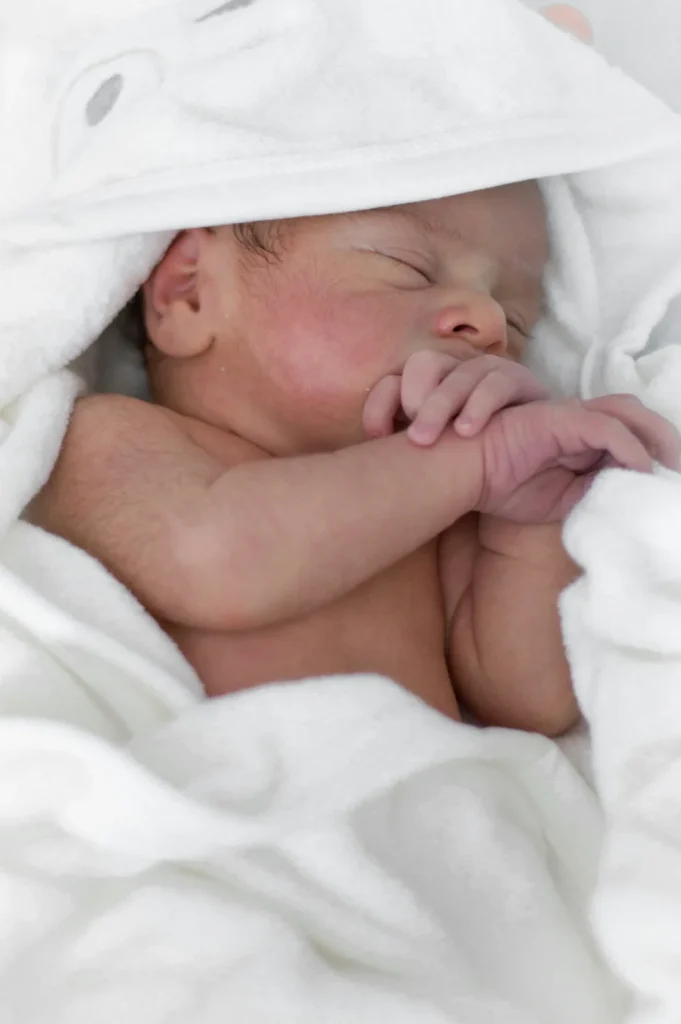
You may be coming for an assessment after birth, or because something about your baby has you wondering. Either way, three things stay the same.
Gentle techniques. With an infant, no manipulation: only very light touch.
Parents close by. You stay close to your baby, from start to finish.
Alongside the pediatrician. I don’t make diagnoses: your baby’s health stays under their doctor’s care.
Why see an osteopath for your baby?
Here are a few situations that bring parents to the practice with their baby.
A few reasons to come in
- assessment after birth,
- intense crying at the end of the day,
- belly that seems hard and bloated, digestive discomfort,
- frequent spitting up,
- head always turned to the same side,
- area of the skull that’s flattening,
- difficulty latching on both sides,
- breastfeeding or bottle-feeding,
- questions about sleep.
“I want to make sure everything is fine after the birth”
Even without any particular concern, many parents choose an osteopathy assessment in the first weeks. It’s a preventive step, to get an outside look at how the baby’s body is adjusting to its new life.
“My baby cries so much at the end of the day, their belly seems hard and bloated”
Intense crying, legs pulled up to the belly, a baby who’s hard to soothe: when digestive discomfort sets in, an osteopathic assessment can explore abdominal tension and overall tone.
“My baby spits up a lot and seems really uncomfortable after feedings”
When spitting up is frequent and the baby seems uncomfortable after eating, some parents choose to come in for a session to explore what might be contributing to it mechanically.
“My baby always turns their head to the same side and doesn’t like it when we turn it the other way”
A persistent preferred position, difficulty latching on both sides, an area of the skull that’s flattening: an osteopathic assessment can explore whether restricted neck mobility is contributing.
Your baby’s sleep
Some parents see an osteopath for questions about their baby’s sleep. Sleep schedules vary from one baby to another, and even from one night to the next for the same child. If their sleep worries you, talk to your nurse or to their doctor.
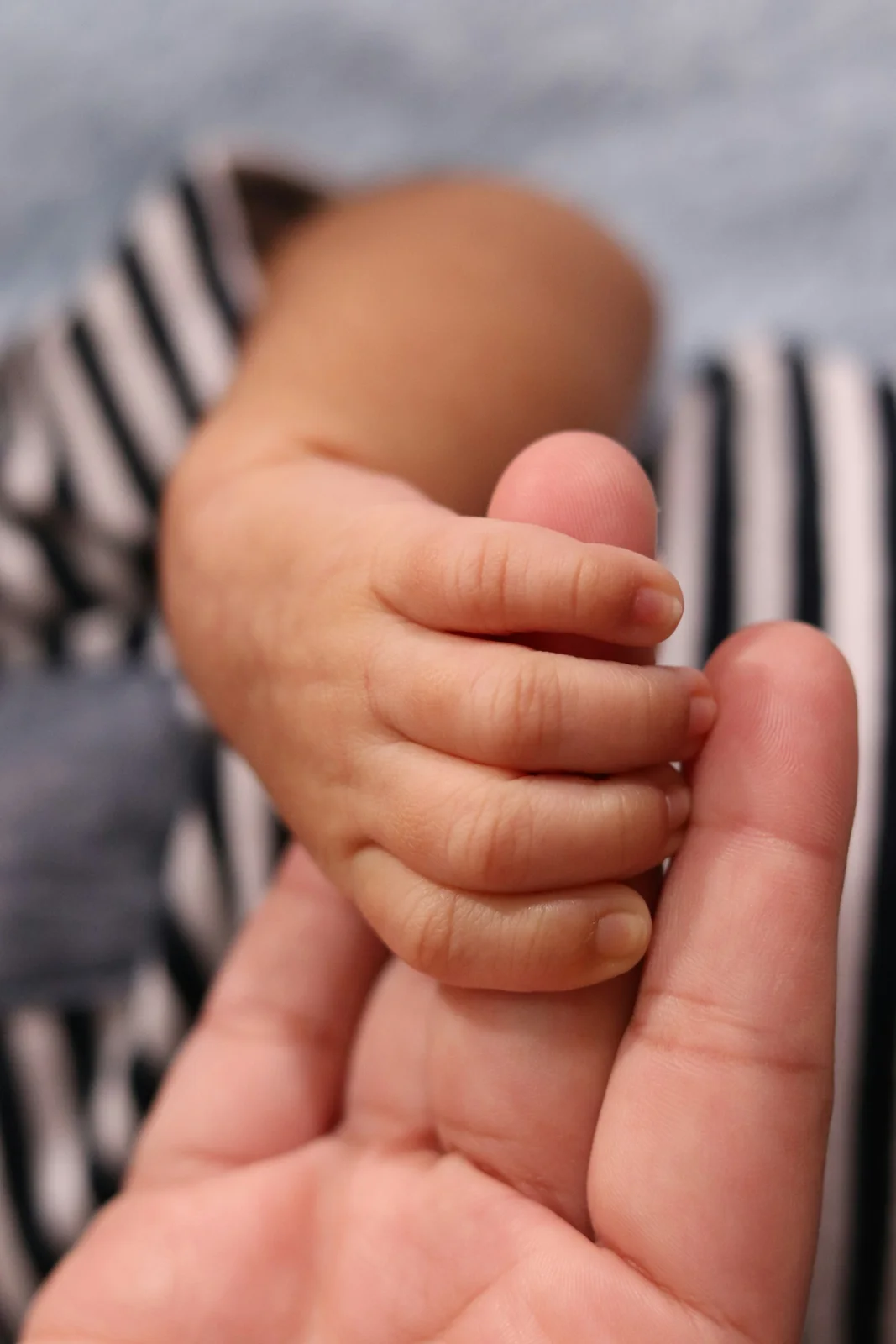
A gentle approach, adapted to infants
The session lasts as long and costs the same as my other sessions. To prepare for your visit, see what to plan for a first appointment. Before I even touch your baby, I take the time to listen.
Pregnancy and birth
We talk about the pregnancy and how the delivery went, and we look at the health booklet together.
Daily life
We discuss your baby’s daily life: how they feed, how they sleep, the positions they like or avoid.
Your baby as a whole
I observe your baby as a whole: their skin colour, their symmetry, their spontaneous postures, their primitive reflexes.
Mobility and sucking
I assess mobility from the feet up to the skull, then I watch how they suckle and place their tongue.
Ideas for home
I give you concrete ideas to carry the work on at home, and I answer all your questions. If a question comes up later, write to me.
Parents stay close by throughout the session.
At what age to come, and when to come back?
In general, I suggest two moments:
- Ideally, I see the little one in the first days after birth. If everything is moving well, we see how they progress.
- Then, I recommend coming back when the little one starts walking (scrambling around, standing up): that’s when there are more falls.
These falls can create small mechanical issues in the legs or the pelvis.
This second moment has no set date: all children go through the same stages of development, but each at their own pace, as the INSPQ (Québec’s public health institute) points out in its From Tiny Tot to Toddler guide.
After the birth, I see moms too: have a look at osteopathy during and after pregnancy.
Your baby’s doctor remains your first point of contact
- If I see something that calls for a medical opinion, I tell you clearly and point you toward the right professional.
- When a session shows me that physiotherapy would be beneficial for the mom, particularly for perineal rehabilitation, I can point you toward physiotherapists who specialize in perinatal care and whom I work with.
If you’re worried about your baby’s health, contact their doctor or call Info-Santé 811, day or night.
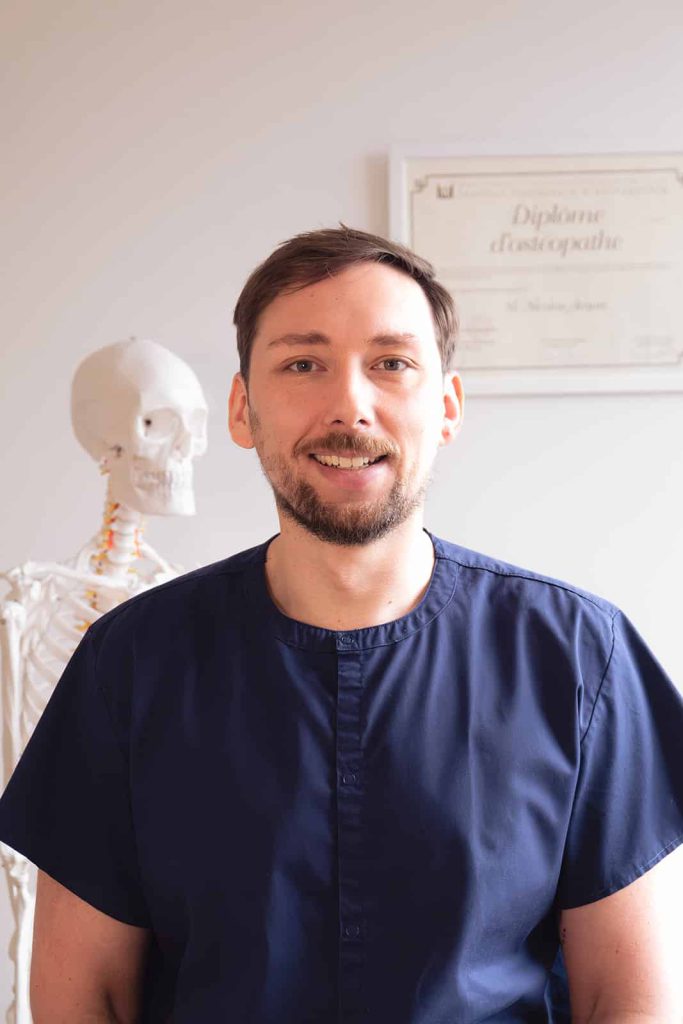
Who sees your baby
I’m an osteopath D.O. (graduate in osteopathy). I earned my diploma at the Institut Toulousain d’Ostéopathie (France) in 2013. I also teach at the IEOQ, the Institut d’Enseignement de l’Ostéopathie du Québec. I’m a member of Ostéopathie Québec, a professional association. I’ve taken several continuing education courses on newborns and infants, including “Examen ostéopathique du nouveau-né” (the osteopathic examination of the newborn) and “Les spécificités du nouveau-né” (the specific features of the newborn). I also took “Les fondamentaux en pédiatrie” (the fundamentals of pediatrics).
My backgroundFees and reimbursement
The session
1 hour, $125 plus taxes
Receipt
You receive a receipt by email, which you can submit to your insurer for reimbursement.
Insurance
Many private insurance plans cover part or all of the cost: check your “paramedical services” or “alternative therapies” coverage with your insurer.
Payment
Interac e-Transfer is the preferred way to pay.
Booking
No credit card or deposit required to book.
RAMQ
Osteopathy sessions are not covered by RAMQ, which runs Québec’s public health insurance plan.
The practice
910 rue Bélanger Est, Suite 206, Montréal, Québec H2S 3P4, between Saint-André and Boyer streets
Centre professionnel Makisa
A ramp leads to the building entrance, and an elevator goes upstairs.
Jean-Talon station (orange and blue lines), the closest to the practice, 450 m away, about a 5-minute walk
By bus, the 95 Bélanger stops on either side of the practice, in both directions: Bélanger / Saint-Hubert and Bélanger / Christophe-Colomb stops.
Street parking nearby, and paid covered parking between Boyer and Saint-André streets (perfect when it snows).
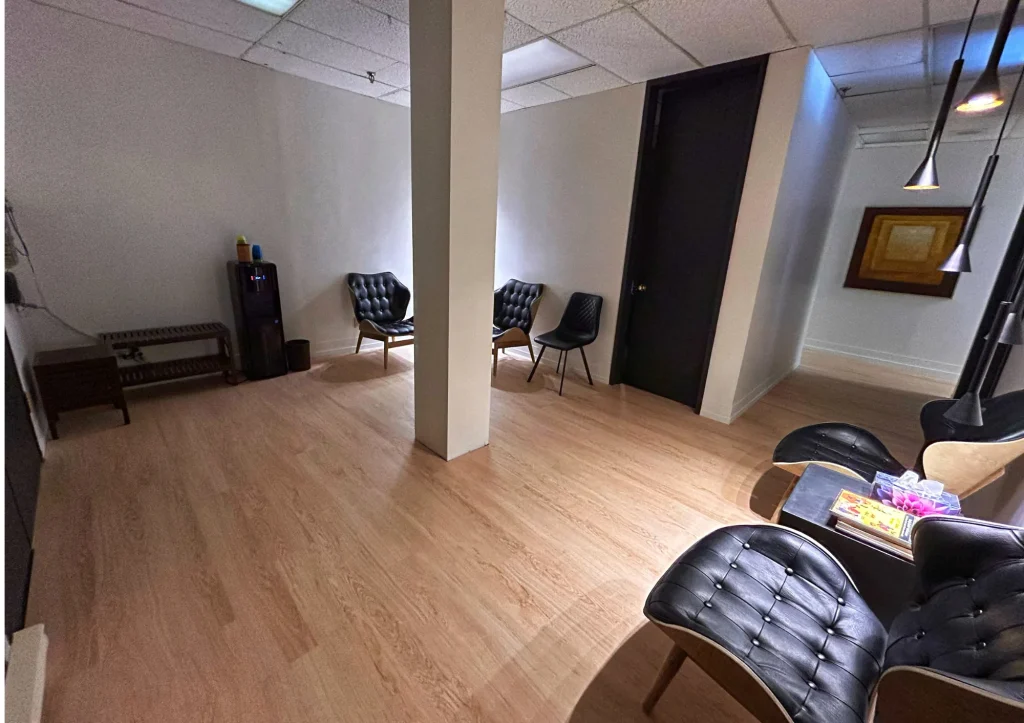 How to get to the practice
Book an appointment for your baby
When the time is right for you, book online on GOrendezvous, or by text at 514-663-3826.
Your questions about osteopathy for babies
When should you see an osteopath for a baby?
As early as possible after birth. There’s no minimum age. Some parents come in during the first weeks of life, sometimes even during the first week, to help with breastfeeding or bottle-feeding. In general, I also recommend coming back when the little one starts walking.
Is osteopathy safe for an infant?
The techniques used with an infant have nothing to do with those used on an adult. They involve very light touch, with no manipulation at all. The session is more like listening with the hands than an intervention in the traditional sense.
How many sessions does a baby need?
It depends on what we observe and how the baby responds. For a preventive assessment with no particular symptoms, one or two sessions are often enough. That’s what we figure out together at the first appointment.
Does osteopathy replace my baby’s medical care?
No. Osteopathy is a complement to pediatric care, never a substitute for it. If a situation calls for a medical opinion, I tell you clearly and point you toward the right professional.
Do parents stay during the session?
Yes, from the start of the session to the end. I start by listening to you, before touching your baby, and I finish by answering your questions.