Blog
Osteopathy and sleep
Sleeping poorly and wondering what an osteopath can do for your sleep? Here are a few pointers on sleep, what I can do for you (and what I can’t), my advice, and when it’s better to talk to your doctor about it. You’ll find me at my practice in Montréal.
By Nicolas Acquié, osteopath D.O.
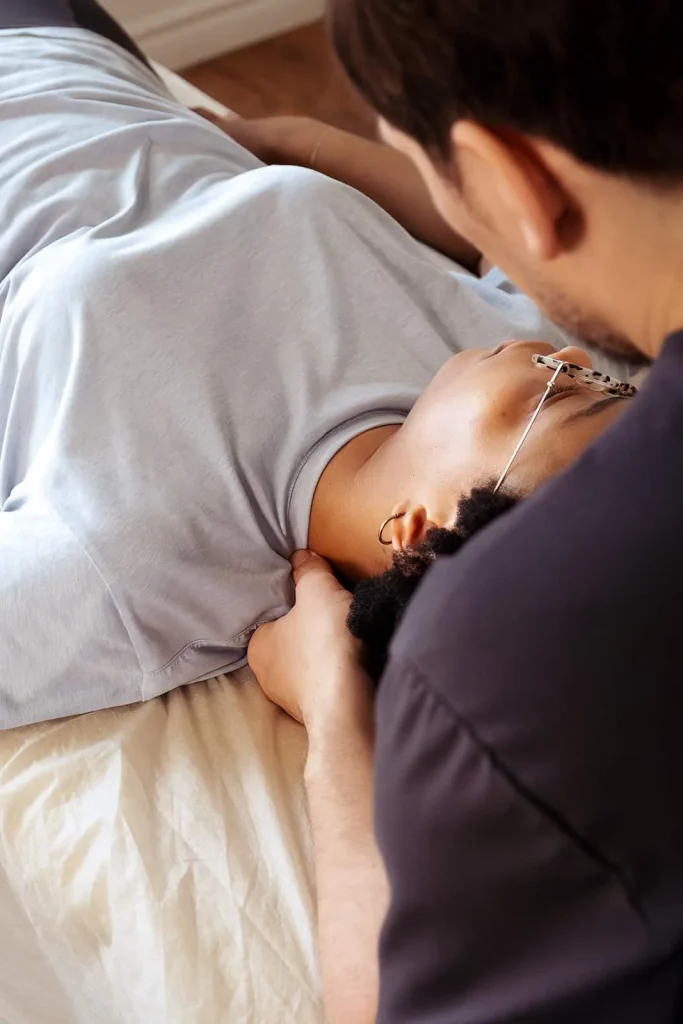
These days, we all know someone who’s tired, who has trouble sleeping. The question of “sleeping well” and its effect on health really matters.
First of all, what is sleep?
Put simply, sleep is compared to a train (a cycle) made up of 3 cars (sleep stages): light non-REM sleep, deep non-REM sleep and REM sleep.
This train makes several loops during the night. Each loop lasts 70 to 100 minutes. According to Université Laval’s CIRRIS research centre, a night usually has 4 to 5 cycles (fact sheet, in French). The cars don’t take up the same place on each pass: early in the night, deep non-REM sleep dominates. Late in the night, REM sleep takes up more room. So cutting your night short mostly means missing the train’s last loops.
The need for sleep varies from person to person, but the Canadian 24-Hour Movement Guidelines recommend 7 to 9 hours a night between the ages of 18 and 64, and 7 to 8 hours from age 65. Still, good sleep isn’t just about how long it lasts: falling asleep without difficulty, waking up rarely and feeling satisfied with your night count just as much.
Osteopaths and sleep: what’s the link?
Often, a physical sensation you feel as uncomfortable can keep you from falling asleep, can wake you up at night…
That physical discomfort is something I can assess with you in a session, like the other reasons to come and see me. That’s how I can help when it comes to your sleep. I work to “give you back options for mobility”. But I can’t promise you better nights.
What’s more, an osteopath has an advisory role, especially when it comes to sleep. It’s my role to take your life context into account, and so your lifestyle habits.
Sleep is a subject I keep training in. In spring 2026, I was lucky enough to spend two days at Université de Montréal, at the summer school of the Quebec Sleep Research Network (Réseau québécois de recherche sur le sommeil). I keep following the events the Network organizes to stay up to date. In a session, it’s always a pleasure to share this new knowledge with you, and to talk about your sleep.
My tips for your nights
At the end of a session, I can give you a few tips for sleeping better.
- The first is regularity: getting up at the same time every day, even on weekends.
- Next, if possible, getting daylight within half an hour of waking up, and avoiding sleeping in and long naps.
- In the evening: a dark, quiet, cool bedroom, no screens in the hour before bed, and no coffee or tea in the six hours before.
Good to know
A Santé Québec Capitale-Nationale document on sleep myths gives pointers close to these tips (the document, in French). It includes getting up at the same time, on weekdays and weekends alike, avoiding caffeine (tea, coffee, chocolate, cola) and a “cool and calm” bedroom. For screens, it advises turning them off at least one to two hours before going to bed. For naps, it advises 15 minutes at most, before 3 p.m.
When should you talk to your doctor?
Osteopathy can’t take the place of a medical opinion. I’m not a doctor. If your nights are still difficult despite these tips, talk to your doctor about it.
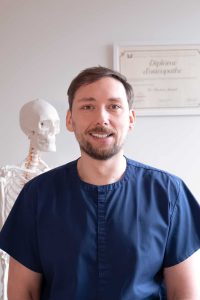
Nicolas Acquié, osteopath D.O.
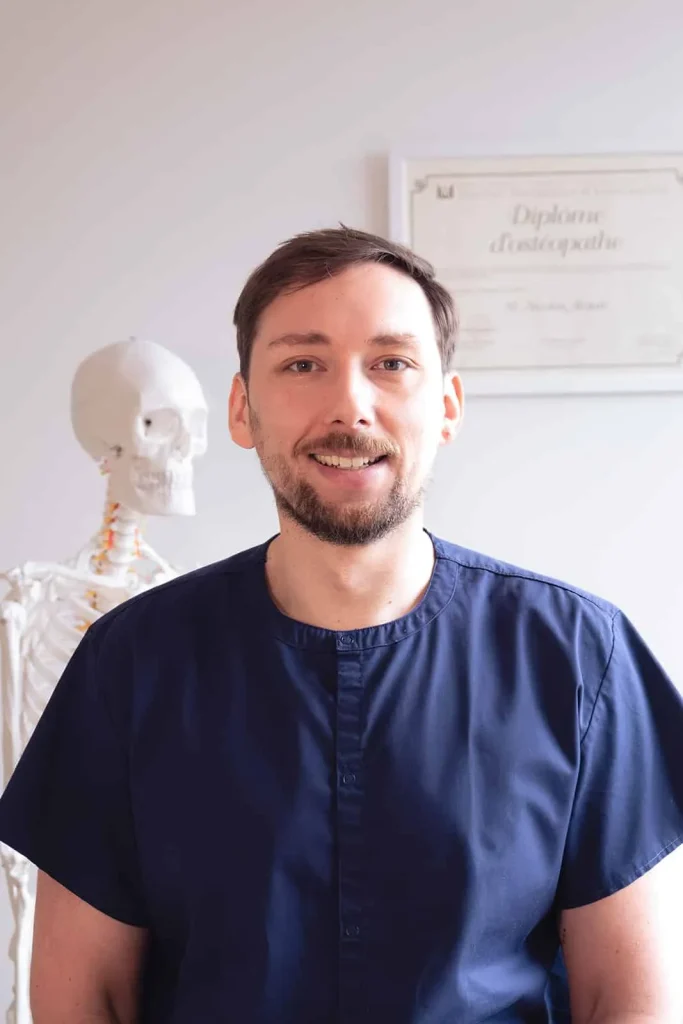
I’m an osteopath D.O. (graduate in osteopathy). I earned my diploma at the Institut Toulousain d’Ostéopathie (France) in 2013. I also teach at the IEOQ, the Institut d’Enseignement de l’Ostéopathie du Québec. You’ll find me at my practice in Rosemont-La Petite-Patrie.
My backgroundAlso worth reading
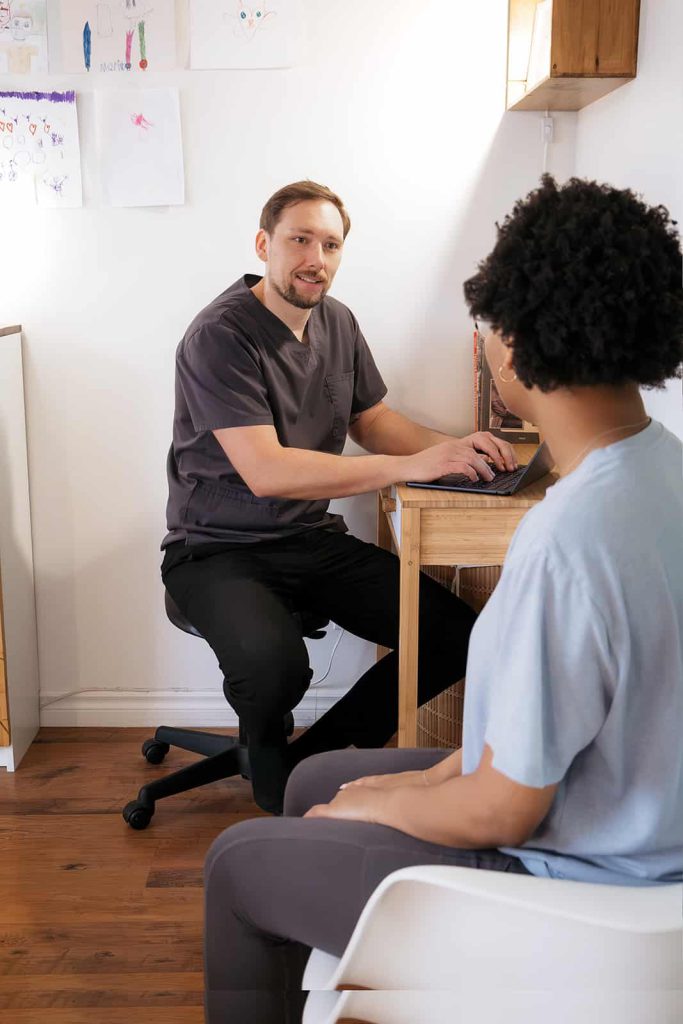
Come and talk about it at the practice
When the time is right for you, book online on GOrendezvous, or by text at 514-663-3826.
Sleeping poorly: what you may wonder before coming in
Can an osteopath help when you sleep poorly?
For ethical reasons, I can’t promise you’ll sleep better, and that isn’t my goal. My goal, as an osteopath, is for your body to move better and for you to feel better in your body, with less discomfort and less strain.
How long does a session last?
A session lasts 1 hour. The first one costs the same as the ones that follow.
How often should you see an osteopath?
How often depends on what brings you to a session. That’s what we figure out together at the first appointment. Some people like to come in to get their body ready for something coming up (renovations, a competition… a vacation). Others come when the tips they know (often shared together during past sessions) are no longer enough to bring them relief. Or else, others come for a follow-up they feel is necessary. There isn’t really a rule on how often follow-ups happen. We take it case by case.
Does an osteopathy session make you tired?
Feeling a little tired after a session can happen, and there’s nothing abnormal about it. Ostéopathie Québec, my professional association, says it’s possible to feel tired, or even a little drowsy. If a sensation seems unusual to you, I’m available for your questions and concerns.